Two Weeks On
The East Pointers, a great band from Canada's East Coast, have a song called Two Weeks. The song tells the story of working away from the people you love, living the rhythm of two weeks on and two weeks off. Most people hear the lyrics and think of the thousands of East Coasters who left to work in Western Canada, chasing opportunity while leaving pieces of their hearts back home.
For me, the song has always meant something different.
I grew up with a mother who worked aboard the Marine Atlantic Ferries. Every year, from May until October, she would be gone for two weeks at a time. Then she would come home, and before long, she would leave again. She started in the summer of 1989, long before cell phones, FaceTime, text messages, or the ability to send a quick photo from wherever you happened to be. When she left, she was simply gone.
Now, as a mother myself, I think about this from a different perspective. My daughter is almost two years older than I was when my mom first started working that schedule. I struggle with being away from my daughter for a few days at a time, even with daily phone calls and the ability to see her face on a screen whenever I want. Fourteen days every month, for six months of every year, feels impossible to me.
I find myself wishing I could sit down with my mother and ask her how she prepared us for those absences. How did she make leaving seem so ordinary? How did she make us feel so secure when she was so many miles away? More importantly, I wish I could tell her how extraordinary she was. When I look back, I don't remember feeling abandoned. I don't remember feeling forgotten. I don't remember counting the days until she returned or feeling like I got half a mother for half the year. I simply remember feeling loved.
That realization catches me off guard.
As an adult, I can calculate the hours and days she was gone. I can appreciate the sacrifices she made and the moments she inevitably missed. I can look at the situation from the perspective of a parent and wonder, "How in the world did she do it?"
But living through it back then, I never questioned whether she was there for me. The truth is that my mother's presence lingered long after she walked out the door.
Part of her magic was the way she made people feel when she was with them. She had an incredible ability to make you believe that whatever you were saying mattered. She listened in a way that made you feel understood. Not judged. Not fixed. Simply understood.
To be clear, she wasn't usually sitting quietly across from you with her full attention and nowhere else to be. More often than not, she was ironing uniforms or our dancing outfits, cooking supper, folding laundry, tole painting, or sewing something as she listened. Her hands were always busy yet somehow, she made you feel like the only thing she was paying attention to.
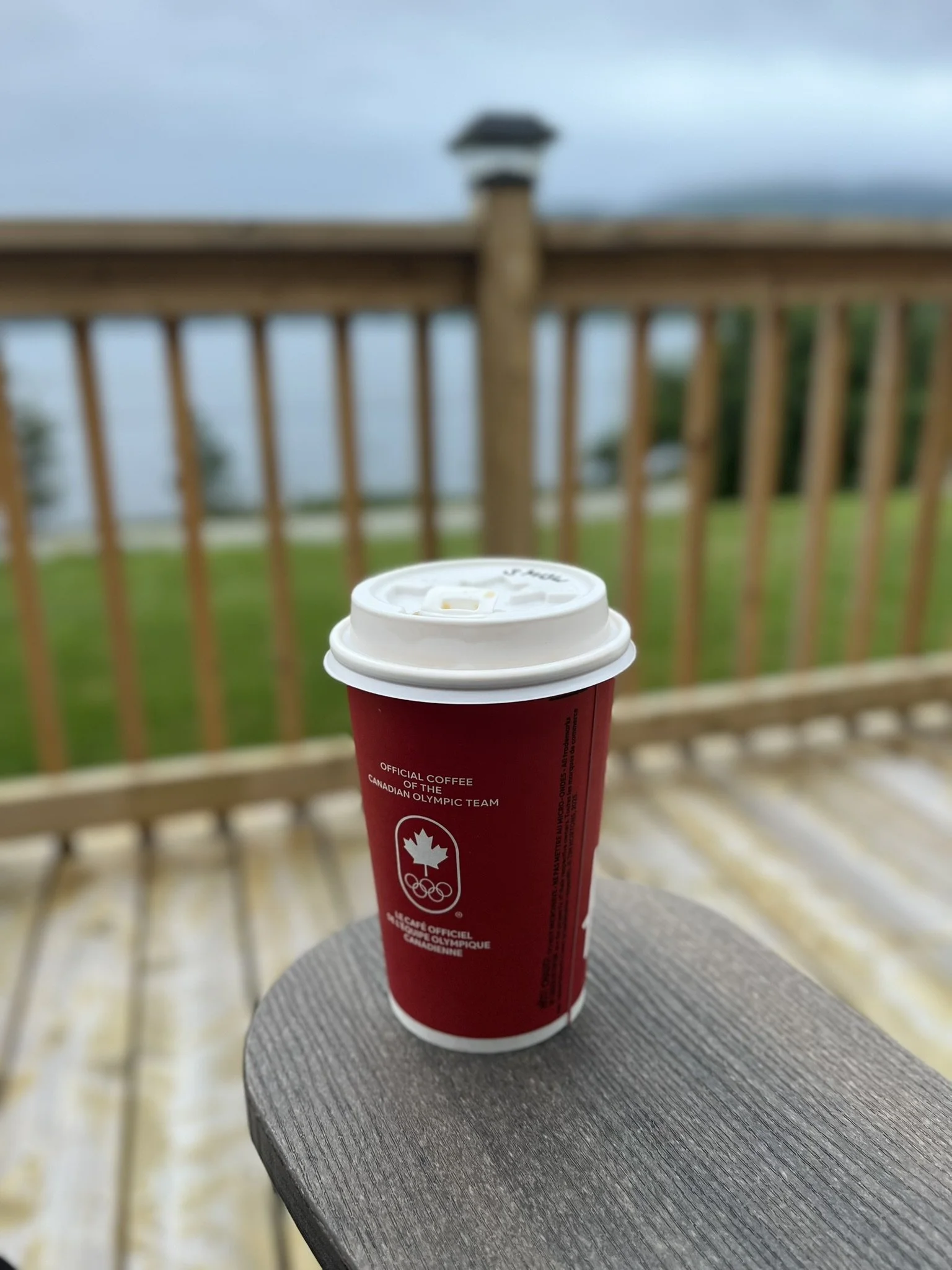
Whether you were meeting her for a short visit or she was one her way home, a stop for her double double was always a requirement.
I think that's why her absence didn't feel empty. She had invested so much of herself while she was present that her love remained when she was gone. The conversations stayed. The encouragement stayed. The feeling of safety stayed. The certainty that someone knew you, understood you, and loved you stayed.
I carried those things with me long after her ferry pulled away from the dock.
Reflecting on this, it makes me rethink what it means to be present for the people we love. We often talk about presence as a physical thing. Being in the room. Sitting in the stands. Showing up at the event. Sharing a meal around the same table. Those things matter.
There is, however, another kind of presence that matters just as much. It's the kind of presence that leaves an imprint. The kind built through consistency, attention, and genuine connection. The kind that allows someone to feel your love and support even when you aren't standing beside them.
My mother taught me that without ever saying a word about it.
What I understand now is that the goal isn't to make the people we love dependent on our constant availability. The goal is to love them so well when we are with them that they can carry that love with them when we are apart.
Some seasons of life require sacrifice. Parents travel for work. Military families endure deployments. Loved ones move away. Opportunities arise in places that pull us from home. Physical absence is sometimes unavoidable. Emotional absence is a different matter entirely.
My mother showed me that you can be gone and still be deeply present in someone's life. You can create a sense of security strong enough to survive distance. You can leave enough love behind that the people who matter most never wonder whether they belong in your heart.
Even now, years later, that's what I remember. Not the departures. Not the distance. Not the two weeks on. I remember the love that stayed in the room after she left.